Urszula Rybicka
The Jewish community of Głogów (Glogau) occupied a uniquely prominent position on the historical map of Lower Silesia. Although not exceptionally numerous compared to other urban centers, its intellectual, cultural, and financial capital surpassed that of other Jewish communities in the region. While the documented presence of Jews in Głogów — a city founded in the 10th century — dates back to the 13th century, it is believed they settled there even earlier. Remarkably, from that point onward, Jews inhabited these lands without interruption until 1942. Other Jewish centers also flourished in the city’s vicinity, such as Góra, located thirty kilometers from Głogów. It is estimated that the Jewish community there existed as early as the 14th century, though it was unable to maintain permanent residency in the town. The modern Jewish cemetery in Góra, located on Lipowa Street, was devastated by the Nazis; today, the site is neglected, with only a few matzevot remaining. The Góra synagogue, built at the beginning of the 20th century, was completely destroyed during the Kristallnacht pogrom.
Głogów and its authorities were, for the most part, tolerant of the Jewish community, allowing it to settle and thrive. However, the Middle Ages saw instances of violence, including a fire in the Jewish quarter followed by a pogrom. In 1442, the townspeople of Głogów demolished the synagogue and looted Jewish homes. While tensions between the Christian majority and the Jewish minority surfaced over the centuries, the Jews were never expelled from Głogów — a fate that befell the community in nearby Wrocław, for instance. Subsequent centuries were more peaceful, leading to the development of a modern Jewish community. The period of Prussian rule marked an era of rapid and free expansion; it is estimated that at the beginning of this period, approximately two thousand Jews resided in Głogów.
As Głogów was not a university town, the most ambitious members of the community left to study in larger nearby cities, such as Wrocław or Berlin. Their high degree of mobility was driven by the pursuit of education and subsequent professional opportunities; most did not return to their hometown. Nevertheless, Głogów was associated with a galaxy of eminent representatives of the Jewish community: rabbis, thinkers, artists, merchants, engineers, and physicians. It was from Głogów that the ancestors of Gershom Scholem, one of the most famous Jewish philosophers of the 20th century, hailed. Furthermore, Rabbi Abraham ben Gedalia Tiktin, well-known in 19th-century Wrocław, served the Głogów community before moving to the capital of Lower Silesia.
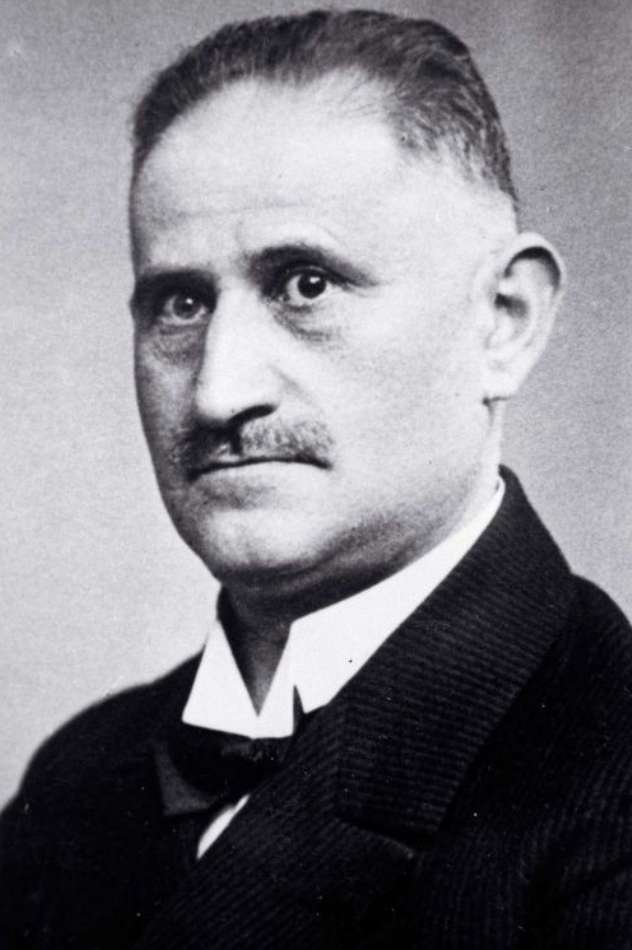
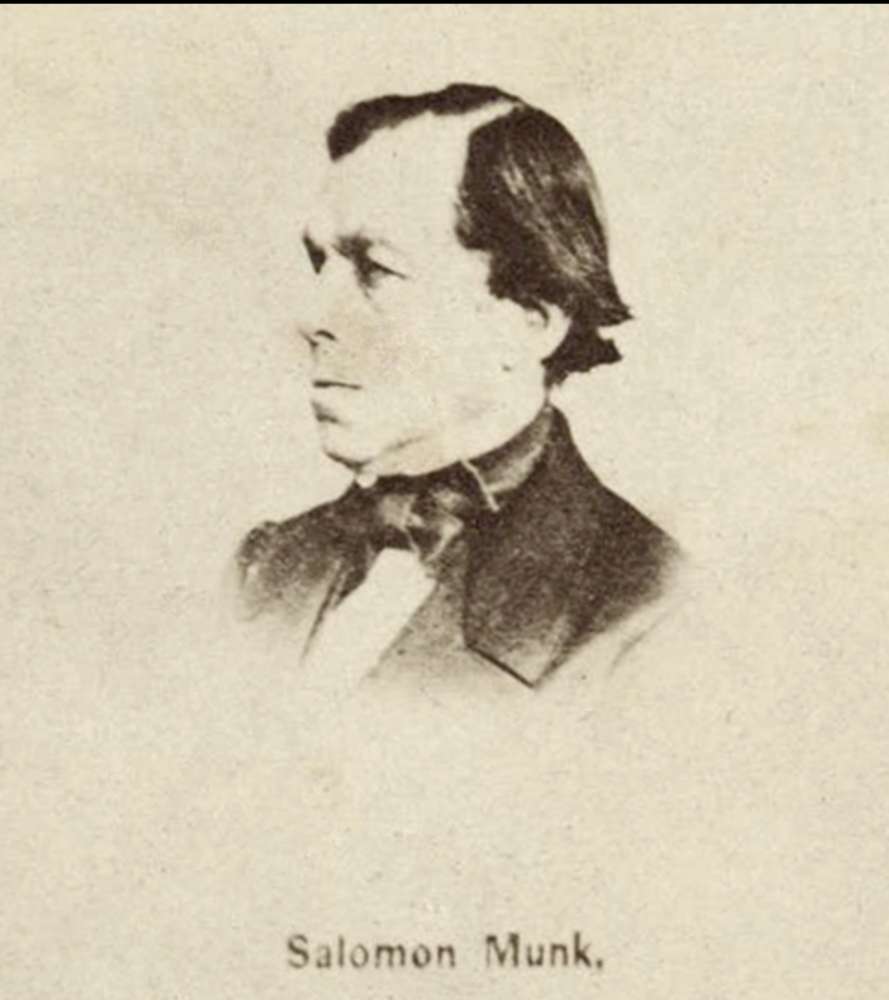
In discussing rabbis and intellectuals, one must highlight two figures of exceptional importance to Głogów: Leopold Lucas and David Cassel. Rabbi Leopold Lucas was one of the city’s most influential Jewish residents, securing his place in history after succeeding Benjamin Rippner as rabbi. His oratorical skills and professional dedication made him one of the most recognizable rabbis not only within the German Jewish community but also among Christians. Rabbi Lucas engaged deeply in interfaith dialogue, researching Jewish-Christian relations, and his insights remain relevant today. In the early 20th century, the city also hosted the Salomon Munk Jewish Masonic Lodge (part of the B’nai B’rith network), which brought together the upper social classes, including entrepreneurs, rabbis, and intellectuals, with Rabbi Lucas among its leaders. In 1942, he and his wife, who originated from Wrocław, were imprisoned in the Theresienstadt ghetto. He served the Jewish community until the end of his life, lecturing and teaching within the ghetto. He died of pneumonia in captivity a year later; his wife was subsequently transported to Auschwitz-Birkenau and murdered.
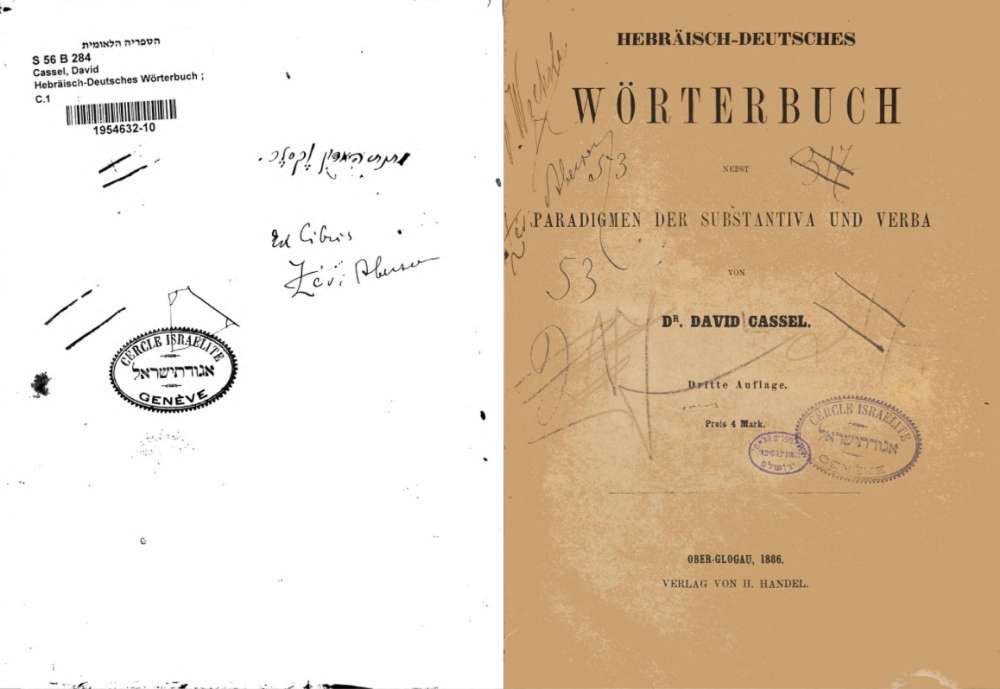
David Cassel, a native of Głogów, was an eminent historian and theorist of Judaism. Although he obtained rabbinic ordination, he never took a pulpit. He focused primarily on teaching Judaism in Berlin’s Jewish schools and was a methodologist and author of numerous textbooks for Jewish studies and the Hebrew language. His contribution to the modern science of Judaism (Wissenschaft des Judentums), which drew from both religion and the humanities, is invaluable. His professional career culminated in his work at the prestigious Higher Institute for Jewish Studies (Hochschule für die Wissenschaft des Judentums) in Berlin.
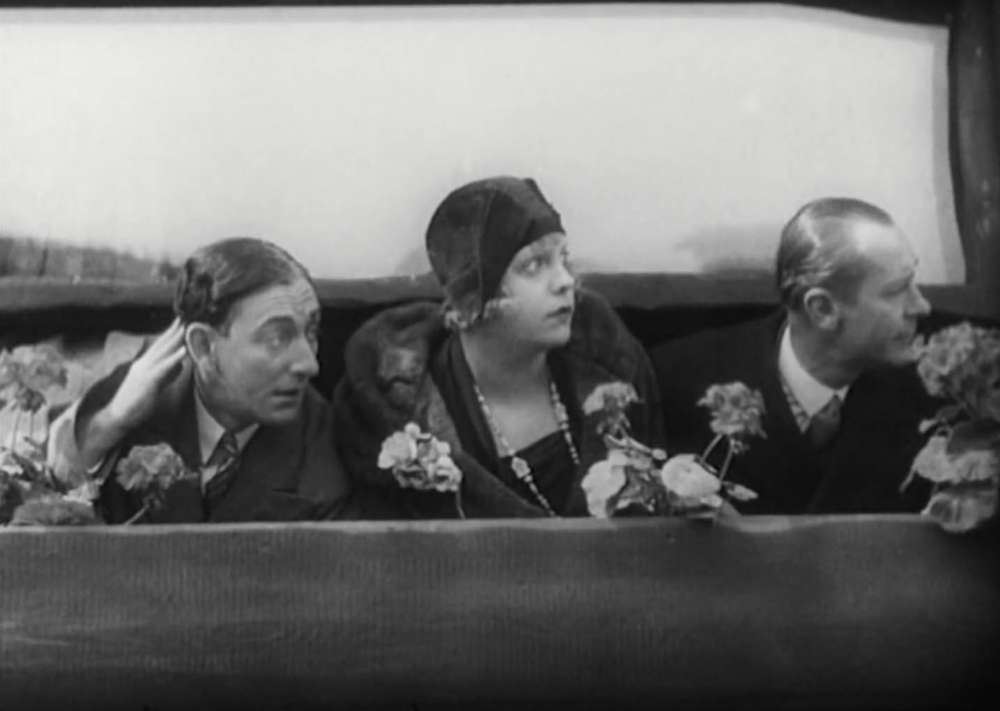
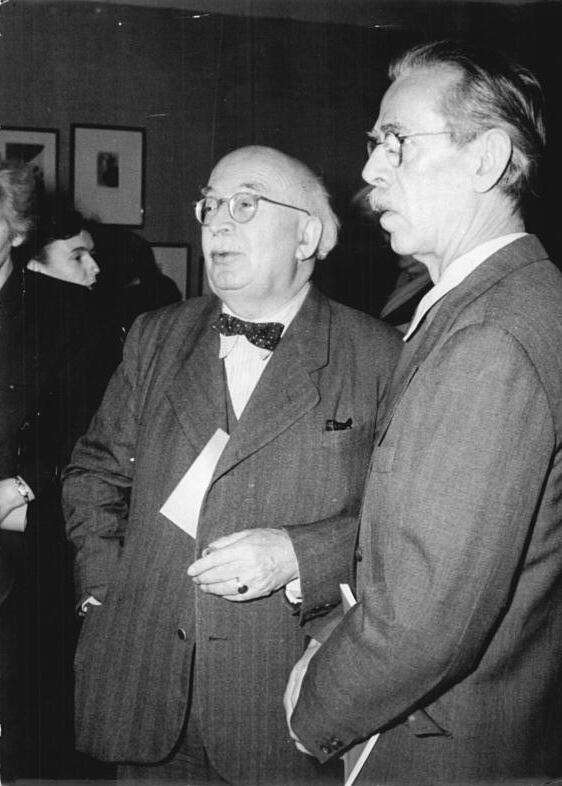
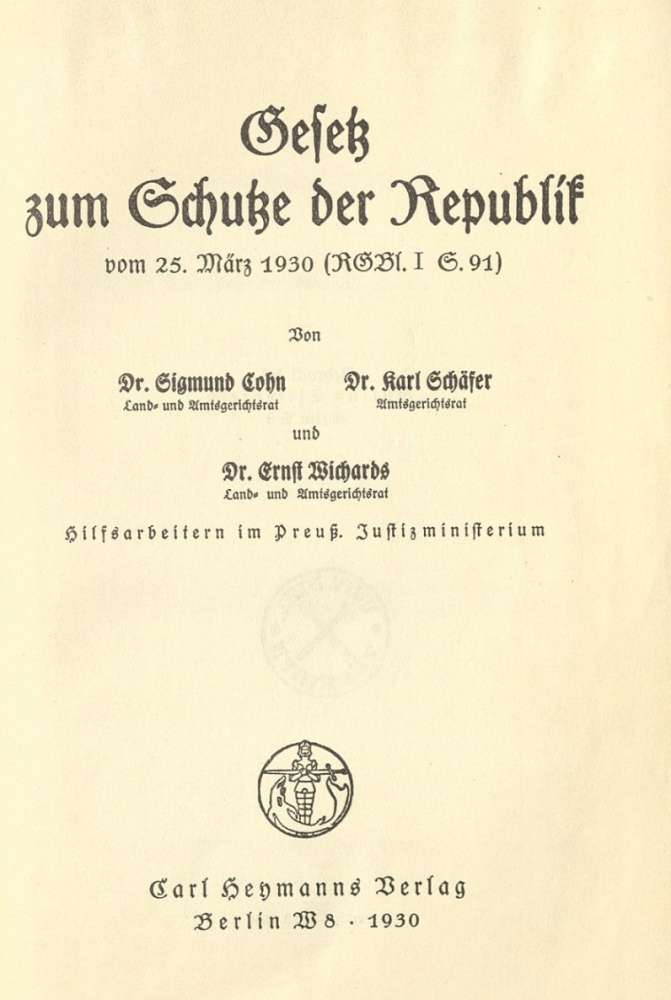
Cultural life in Głogów developed dynamically, matching the quality of larger German cities. Notable members of the Jewish community who shaped this culture included the actor Paul Graetz, the writer Arnold Zweig, and the publisher Carl Heymann. Graetz performed in Berlin theaters and on the stage of the Municipal Theater in Głogów before moving to Frankfurt am Main to further his career. Following the Nazi rise to power, he fled to the United Kingdom and later to the United States. In his homeland, he was a beloved actor known for his comedic and cabaret performances and his vocal talent; he died of a stroke shortly after beginning a career in Hollywood. Arnold Zweig, who spent only his childhood in Głogów, left an indelible mark on literary history. An active Zionist, he fled the Nazis to Haifa, but returned to East Germany after the establishment of Israel. There he wrote and published, with his works often echoing memories of an idyllic childhood in Głogów. Upon visiting his hometown later in life, he observed with sorrow how heavily it had been devastated by the war. Finally, Carl Heymann, born at the end of the 18th century, achieved extraordinary success in the publishing industry; the company he founded remains one of the largest publishing houses in Germany today. He began his career trading books in a local antiquarian shop but quickly turned to publishing. He moved to Berlin, where he acquired other publishing firms to create one of the industry’s most significant enterprises. Heymann achieved immense success and prestige, serving on the Berlin City Council and the board of the Jewish community in Berlin.
In the first decades of the 20th century, over a dozen Jewish physicians practiced in Głogów, including Dr. Friedrich Gruber, Dr. Fritz Dobberstein (who earned his doctorate in Wrocław), and Dr. Ernst Bernhard Getzel. He emigrated to Chile before the war, but since his diploma was not recognized there, he was unable to continue his profession. Notably, his mother was the only person from the city’s entire Jewish community to survive the Holocaust without emigrating. In 1942, she was transported to Theresienstadt, where she survived the war before joining her son. The family later made aliyah to Israel, where they spent the remainder of their lives. Another notable physician was Dr. Erich Lindemann, who was murdered after the Nazis came to power. Many doctors were stripped of their right to practice as early as the mid-1930s, as a deluge of anti-Semitic regulations barred Jews from social and professional life. In this way, the Nazis coerced the Jewish minority to emigrate from the Reich.
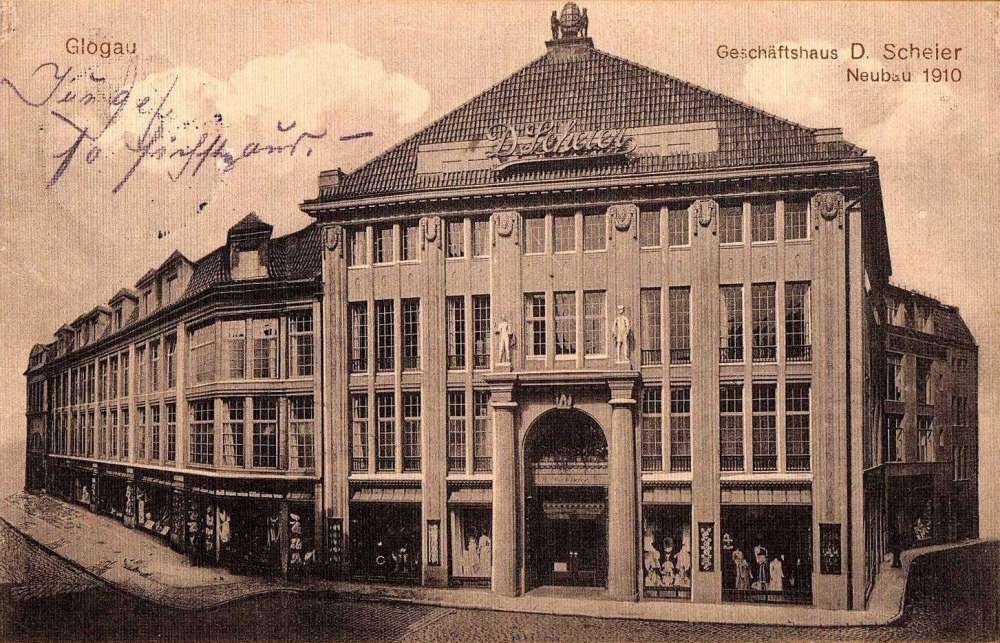
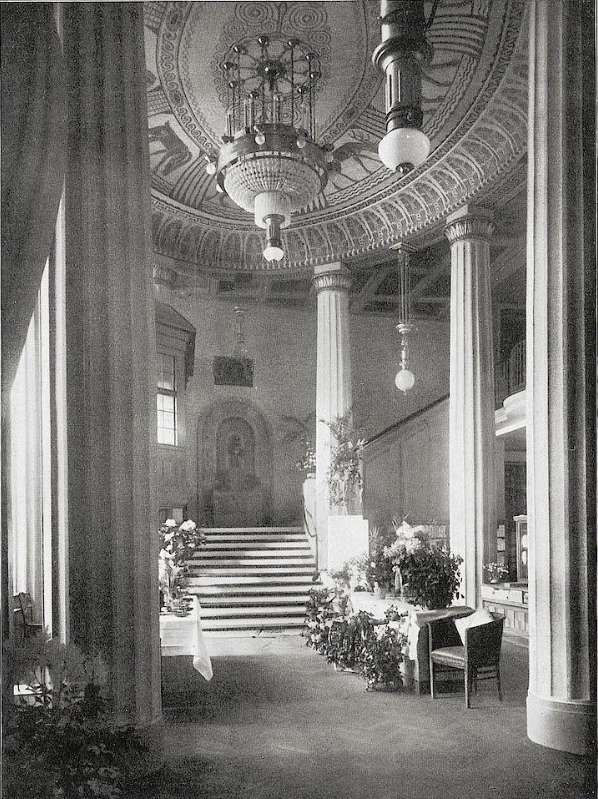
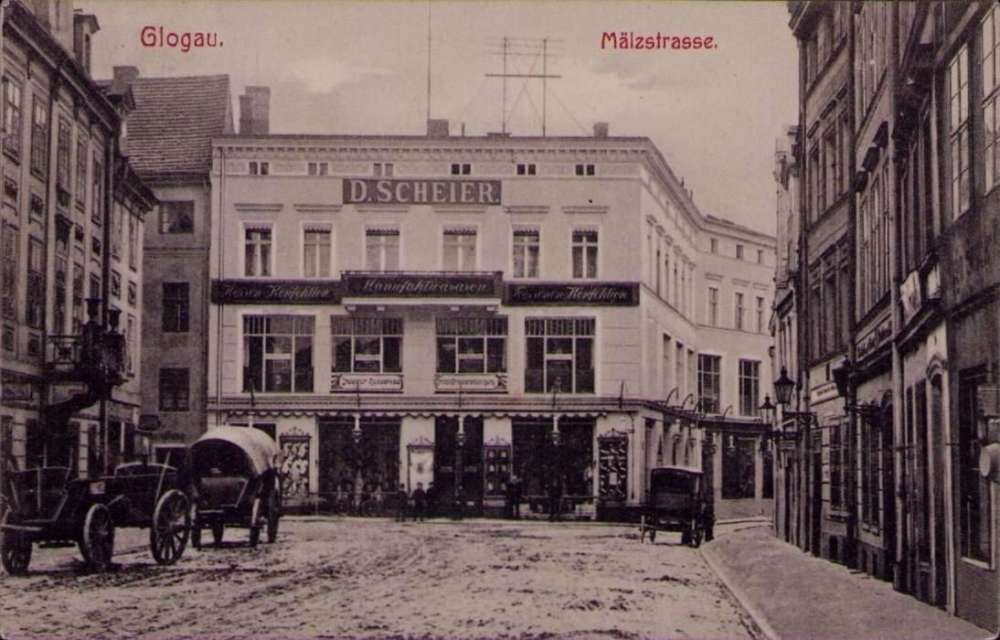
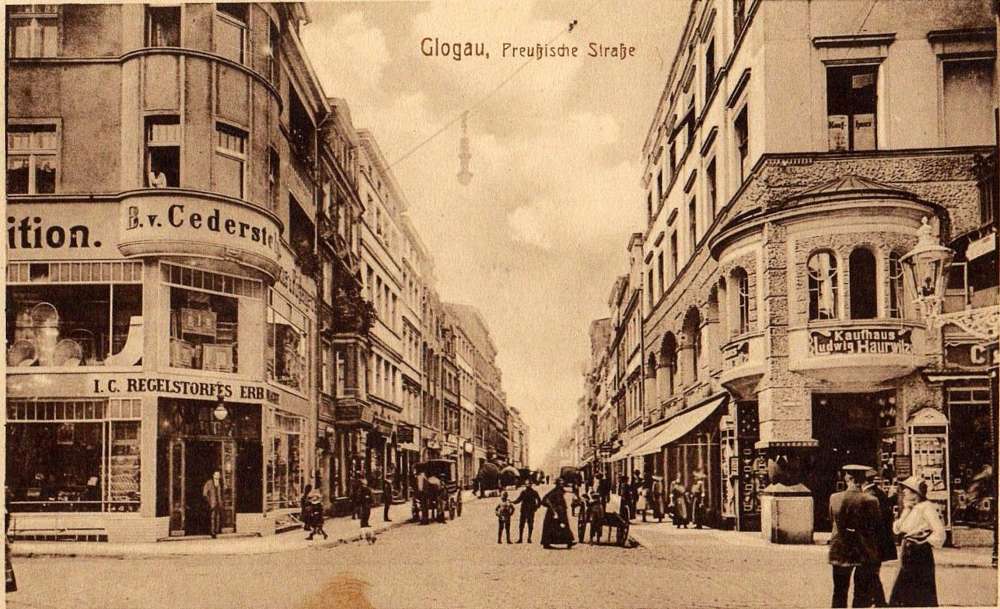
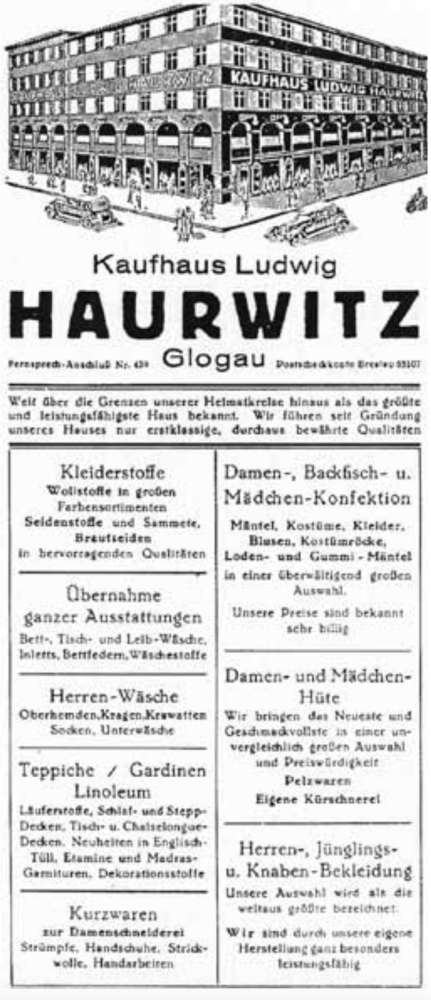
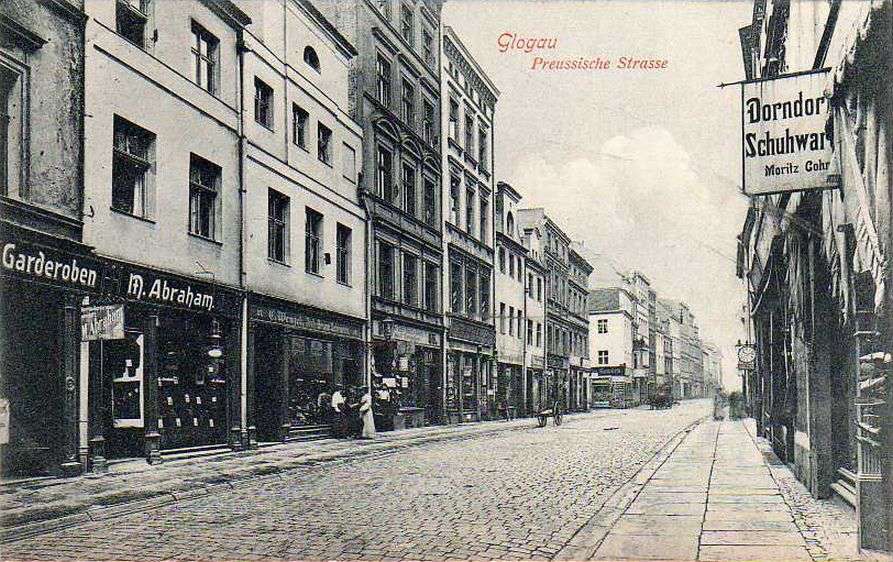
The prosperity of the Jewish community peaked in the 19th and early 20th centuries. The Jewish residents were largely liberal and assimilated, integrating seamlessly into the social fabric of Głogów. Their contribution to the city’s development was substantial; beyond their cultural and intellectual pursuits, they played a vital role in commerce. In the 18th and 19th centuries, merchants from Głogów regularly attended the Wrocław fairs; consequently, two territorial synagogues (no longer extant) were established for them in the Silesian capital: the New Głogów Synagogue and the Głogów Synagogue. Evidence of Głogów’s Jewish entrepreneurship could be seen in the numerous Jewish shops in the city center, most notably the luxury department stores of Ludwig Haurwitz (on present-day Grodzka Street) and Scheier (on present-day Słodowa Street). These were hallmarks of a modern city, reflecting the wealth of residents who embraced contemporary trends. At Ludwig Haurwitz’s establishment, one could purchase luxury home furnishings, textiles, and cosmetics, or enjoy an elegant meal in the on-site restaurant. Haurwitz also owned a similar department store in Legnica, underscoring his success. Tragically, his business was seized by the Nazis in the 1930s, and he was murdered in Riga. The operations of these two department stores made Głogów the second most important commercial center in the region after Wrocław.
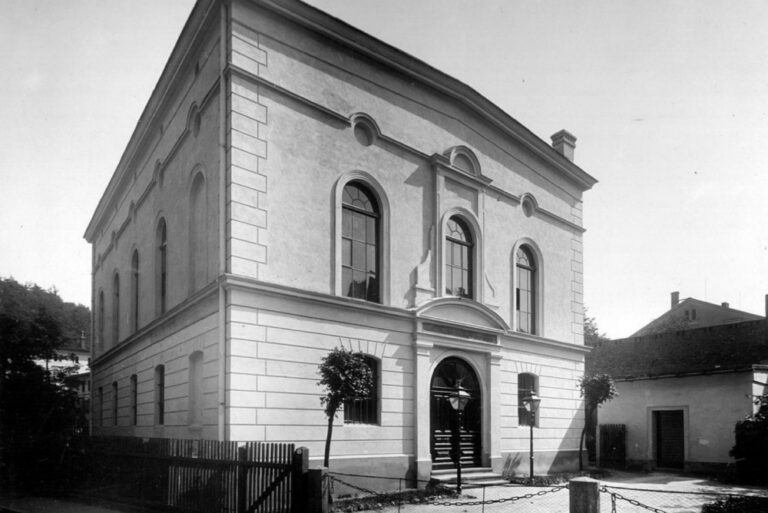
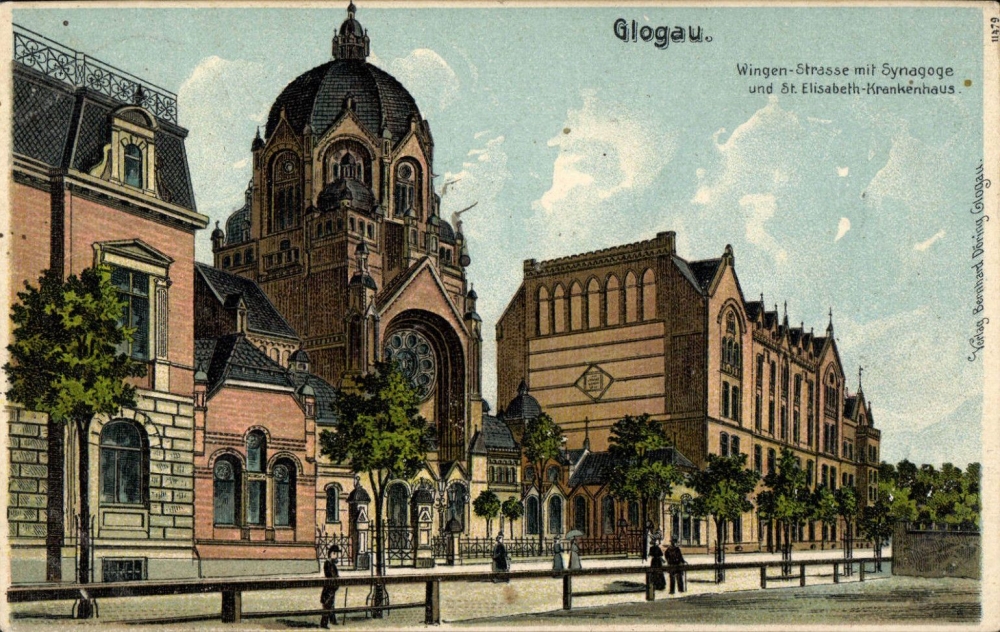
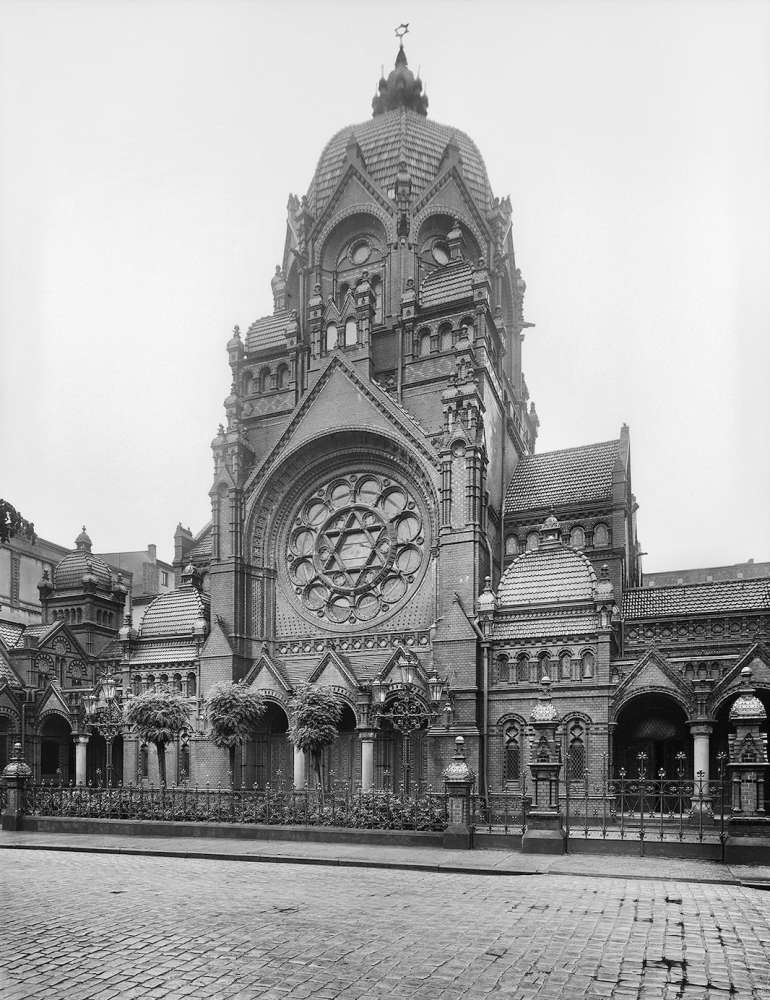
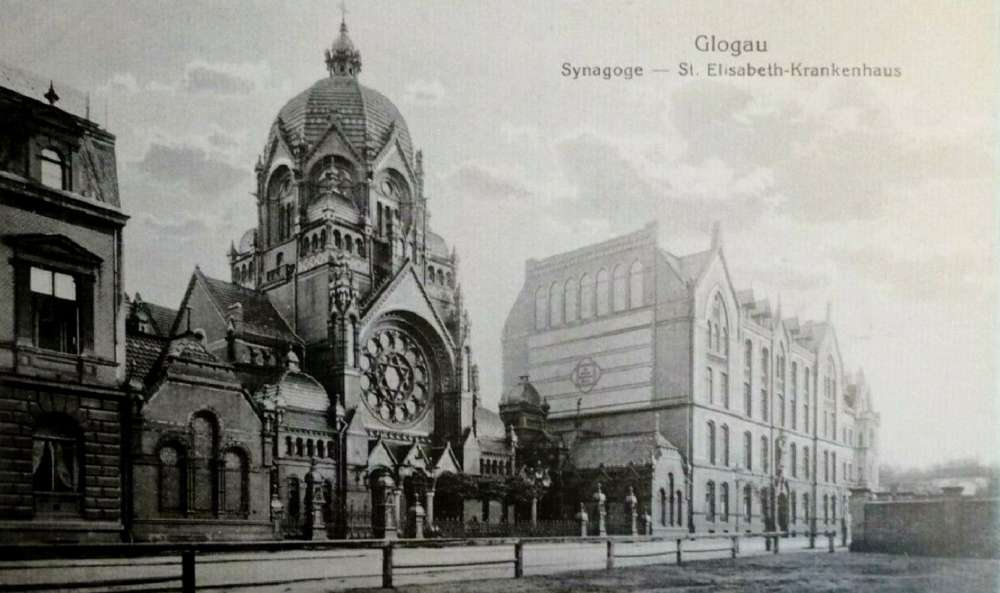
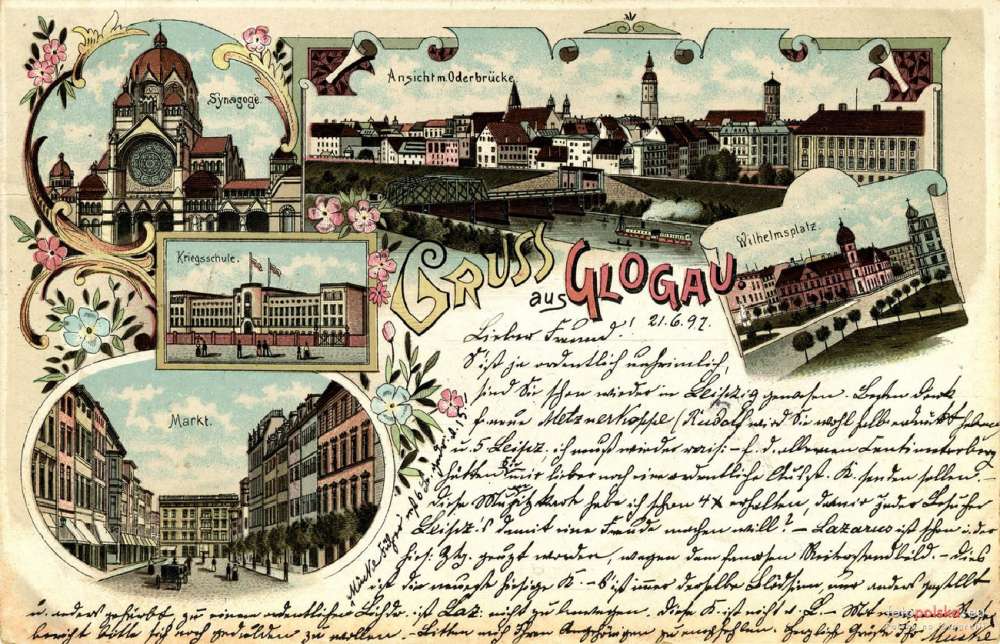
Among the most significant sites of Jewish heritage was the religious infrastructure essential for maintaining a community. The skyline of Głogów was famous for the New Synagogue, praised for its architecture and opulence. The New Synagogue occupied a prestigious site in the city center and was distinguished by its magnificent design. It was designed by architects Hans Abesser and Jürgen Kröger, who modeled it after the synagogue in Munich. To ensure the building was visible from afar, a massive dome was added, bringing the total height to 32 meters. The main edifice (located on present-day Kołłątaja Street) was flanked by two smaller wings: one housed the synagogue caretaker, while the other served as a small prayer hall. The dedication of the synagogue in 1892 was a major civic event attended by Jews and non-Jews alike. At that time, two rabbis served the community: Benjamin Rippner and Leopold Lucas. As in many German synagogues, the Głogów synagogue featured an organ to enrich the services. The house of worship was renowned for its capacity, accommodating over five hundred people: three hundred men and two hundred and fifty women. Meanwhile, a much smaller prayer house on present-day Garncarska Street served the Orthodox community. The end of the New Synagogue, like many across Germany, came with the Kristallnacht pogrom. On the night of November 9, 1938, a nationwide pogrom took place, during which houses of worship were looted and burned. The Głogów synagogue was engulfed in flames, and its ruins were dismantled in the following days. Witness accounts suggest that the arson had been prepared several days in advance.
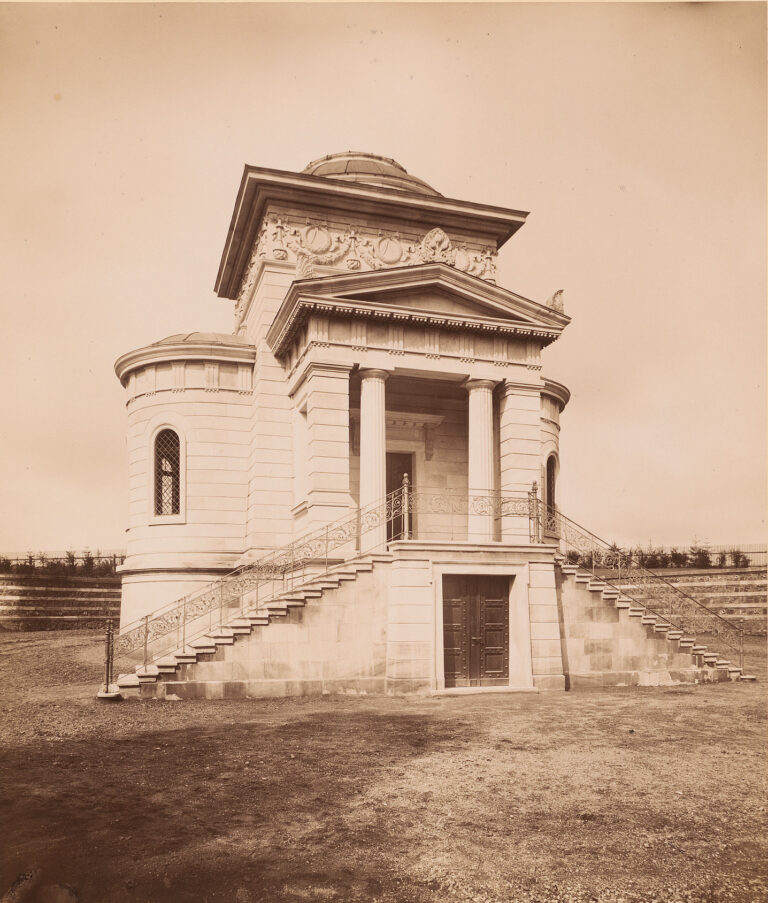
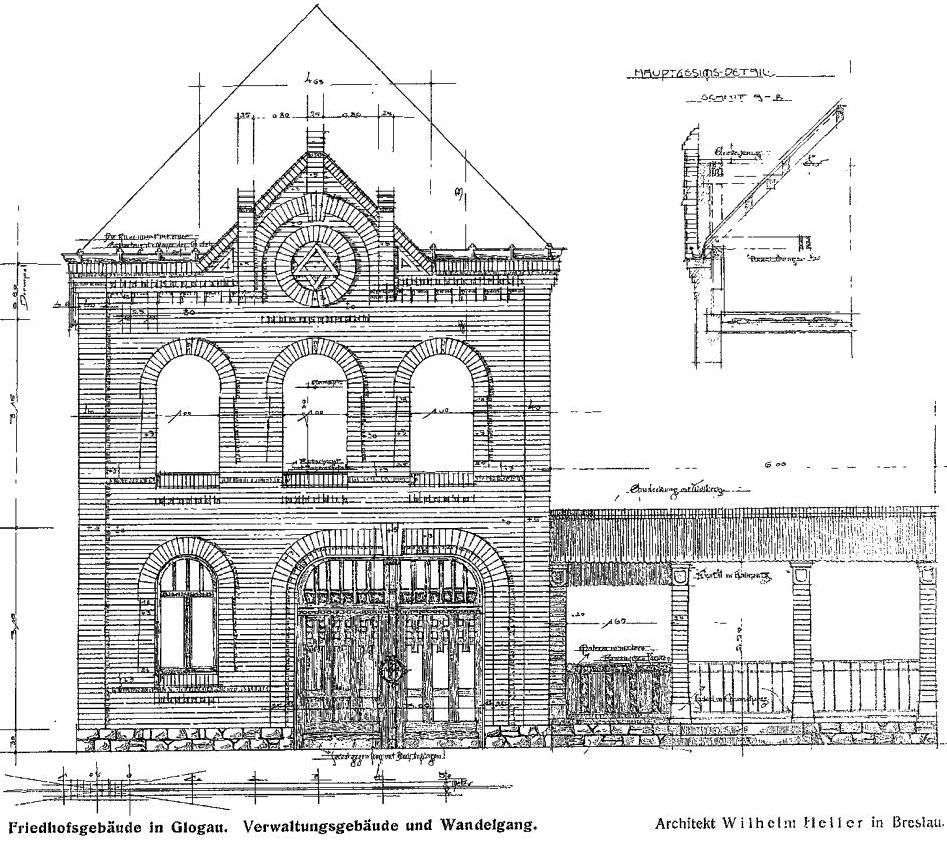
Over seven centuries, four Jewish cemeteries existed in Głogów, though little is known about the first, medieval site. A modern cemetery from the 17th century operated for less than fifty years near the road to Biechów. Another necropolis was situated near the moat, but it was deliberately destroyed in 1740. It was only several years later, under Prussian rule, that Jews regained the right to bury their dead in that area. At the beginning of the 19th century, this cemetery was desecrated again, and the matzevot were plundered. Municipal authorities eventually decided to move the remains to a new Jewish cemetery, which operated until 1937 on present-day Sienkiewicza Street. This necropolis featured an imposing pre-burial house designed by the Jewish architect Wilhelm Heller, who was responsible for many successful projects in Wrocław and Bytom. Unfortunately, even before the war, the Nazis used the site for military purposes and for storing looted property. The matzevot were stolen and resold, and only a small fraction survived the war. In turn, the Communist authorities sought the land for a new housing estate; a partial exhumation was carried out, and the remains were reinterred in a collective grave at the Catholic cemetery. Today, the site of the Jewish cemetery contains a playground and part of a medical clinic.
It is estimated that before the Nazi rise to power, the Jewish community in Głogów numbered approximately six hundred people. The vast majority emigrated in hopes of escaping the Nazi regime and persecution. By 1942, only thirty-five Jews remained in Głogów; they were unable to escape and were deported to transit ghettos in Izbica and Theresienstadt. Those who survived the ghetto conditions were eventually sent to death camps and murdered. The centuries-long presence of the city’s Jewish community was extinguished by the German machinery of death, and the Holocaust became the final chapter of the history of German Jews in Głogów. After the war, these territories were incorporated into Poland, and a Polish population arrived, including Polish Jews who had survived the Holocaust. However, because Głogów was a fortress city (Festung Glogau), it was almost completely destroyed during the fighting at the end of World War II. The ruined infrastructure and lack of housing meant that post-war Jewish settlement was minimal compared to other Lower Silesian towns.
The fall of Communism and the establishment of democratic rule in Poland allowed for a rebirth of Jewish life. However, in cities like Głogów, the Jewish community had effectively ceased to exist. Nevertheless, public sentiment changed, and Jewish heritage began to be discussed with solemnity and respect. The memory of this extraordinary chapter in the history of the Lower Silesian city was manifested in the commemoration of the German Jewish community in 1993. A monument to the Jews of Głogów was unveiled, initiated by Franz D. Lucas, the son of the city’s last rabbi, Leopold Lucas. On the monument, the City Council, representing the residents, expressed recognition for the enduring contributions of the Jewish community. During the unveiling, the Mayor of Głogów, Jacek Zieliński, recalled the synagogue, which “was widely considered among the most beautiful in Silesia.”